
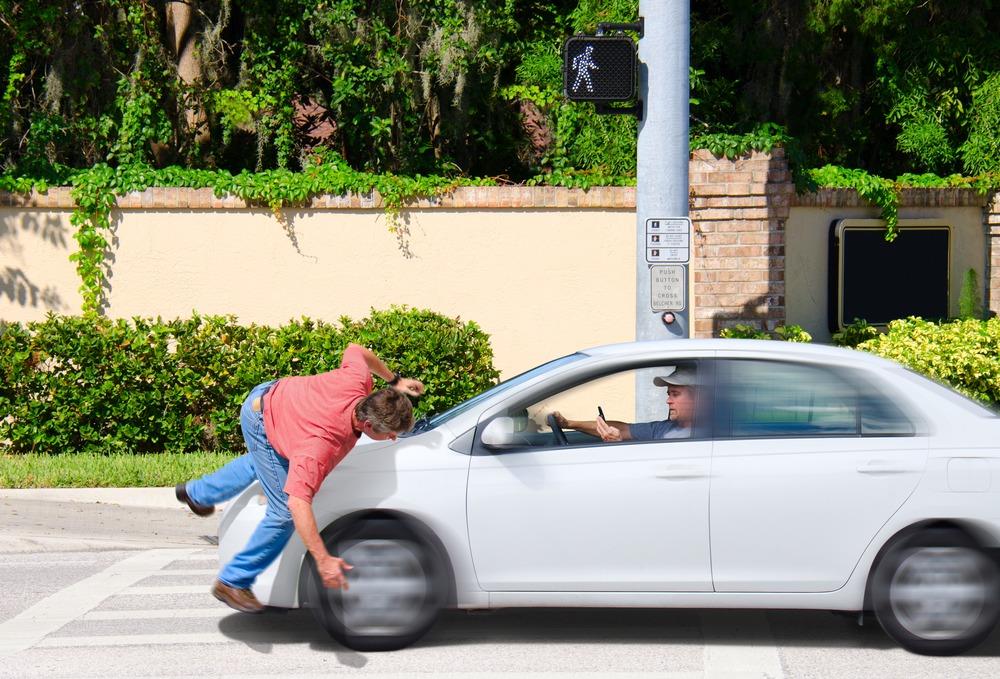
Were You Hit by a Driver Who Fled the Scene in New Jersey?
A hit-and-run turns a bad crash into a confusing one. One moment you are stopped at a light on Kennedy Boulevard or crossing Bergen Avenue, and the next, the driver who hit you is gone. If you need to report a hit-and-run in New Jersey, what you do in the first few minutes and days can decide whether the driver is ever found and whether your insurance claim gets paid.
This guide explains exactly how to report a hit-and-run accident in New Jersey: who to call, what the law requires, which deadlines apply, and how victims can still recover compensation when police never identify the driver.
Quick Answer: How Do You Report a Hit-and-Run Accident in New Jersey?
To report a hit-and-run in New Jersey, call 911 immediately, stay at the scene, and give police every detail you have about the fleeing vehicle. New Jersey law requires immediate notice to police after any crash involving injury, death, or more than $500 in property damage (N.J.S.A. 39:4-130).
- Get to a safe spot and call 911. Do not chase the driver.
- Tell the dispatcher your location, any injuries, and the fleeing vehicle’s plate, make, color, and direction of travel.
- Stay at the scene until police arrive, and ask for the officer’s name, badge number, and the crash report (NJTR-1) number.
- Photograph the scene, your injuries, and the vehicle damage, and collect witness contact information.
- Get medical care the same day, even if you feel fine.
- Notify your auto insurer promptly to protect your Personal Injury Protection (PIP) and uninsured motorist (UM) benefits.
- Speak with a New Jersey injury lawyer before giving any recorded statement.
What Counts as a Hit-and-Run Under New Jersey Law?
New Jersey’s hit-and-run law, N.J.S.A. 39:4-129, requires any driver who knows they were involved in a crash to stop at or as close to the scene as possible and remain there until they have:
- Given their name and address and shown their driver’s license and registration to the injured person, the other driver, any witness, or police
- Provided reasonable assistance to anyone who was hurt, including arranging transportation to a hospital or doctor when treatment appears necessary or is requested
- Reported the crash to the nearest police office if no one at the scene is able to receive their information
A driver who leaves without doing these things has committed a hit-and-run, which prosecutors often charge as “leaving the scene of an accident.” The law covers crashes involving injuries, deaths, and property damage alone. If a driver hits an unattended parked car, they must find the owner or leave a written note with their name and address in a secure, visible spot on the vehicle. If they damage other unattended property, such as a fence or storefront, they must notify police.
Drivers cannot easily claim they did not notice. The statute presumes a driver knew about the crash if it caused injury, death, or at least $250 in damage, and it presumes the registered owner was the one driving.
Step 1: Get Safe and Call 911 Right Away
Your safety comes first. If you can, move out of traffic, turn on your hazard lights, and check yourself and your passengers for injuries. Then call 911, even if the crash seems minor.
Do not follow the fleeing driver. Chasing a vehicle through Jersey City traffic puts you and others at risk, can cause a second crash, and can complicate your claim. Your job is to observe and report, not pursue.
A 911 call routes you to the right agency. In most towns, that is the local police department. On the New Jersey Turnpike and the Garden State Parkway, the New Jersey State Police typically respond. New Jersey law requires notice “by the quickest means of communication,” which in practice means calling from the scene.
Step 2: Give Police Every Detail About the Fleeing Vehicle
Small details often lead police to a hit-and-run driver. Write down or record a voice memo of everything you remember while it is fresh:
- License plate number, even a partial plate, and the issuing state
- Make, model, color, and body style (sedan, SUV, pickup, van, box truck)
- Visible damage, dents, broken lights, or missing parts
- Commercial markings, company names, rideshare stickers, or dealer plates
- The driver’s appearance and any passengers
- Direction of travel and the street or highway the driver turned onto
- The exact time and location of the crash
Before police leave, ask for the responding officer’s name and badge number, the department handling the case, and the crash report number. You will need all three for your insurance claim and to follow up on the investigation.
Step 3: Preserve Evidence Before It Disappears
Evidence in a hit-and-run case disappears quickly. Street crews sweep up debris, paint transfer washes away, and many business surveillance systems overwrite footage automatically, sometimes within days. As our guide to the first 72 hours after a serious crash explains, acting early makes a real difference.
- Photograph the scene from several angles, including skid marks, debris, traffic signals, and street signs
- Photograph your vehicle damage and any visible injuries
- Keep pieces of the other vehicle, such as mirror or light fragments, which can help identify its make and model
- Get names and phone numbers of witnesses before they leave
- Note nearby cameras, including storefronts, gas stations, parking garages, apartment buildings, doorbell cameras, and other drivers’ dashcams
Tell the officer about any cameras you spot. An attorney can also send preservation letters to property owners before the footage disappears.
Step 4: Get Medical Treatment, Even If You Feel Fine
Adrenaline can mask concussions, whiplash, back injuries, and internal injuries for hours or even days. Accept an EMS evaluation at the scene or see a doctor the same day. Prompt treatment protects your health and creates a medical record that links your injuries to the crash.
Gaps in treatment are one of the most common reasons insurers dispute injury claims. Keep every discharge summary, prescription, imaging report, and bill.
Step 5: Get a Copy of Your New Jersey Crash Report (NJTR-1)
When police investigate a crash in New Jersey, the officer completes the New Jersey Police Crash Investigation Report, known as the NJTR-1. It documents the scene, the vehicles, witness information, and the officer’s observations, and it is usually the first document an insurer asks for.
- For crashes the New Jersey State Police handled, including those on the Turnpike, request the report through the NJSP crash report request portal.
- For crashes a municipal department handled, such as the Jersey City Police Department, request the report from that department’s records bureau, which often accepts requests online.
If police did not respond, New Jersey law requires the driver to send a written crash report to the Motor Vehicle Commission within 10 days for any crash involving injury, death, or more than $500 in damage, unless a law enforcement officer has already filed one (N.J.S.A. 39:4-130). Some municipalities offer online self-reporting forms for minor, property-damage-only crashes. If anyone suffered an injury, call police instead of relying on a self-report.
Step 6: Notify Your Insurance Company Promptly
New Jersey is a no-fault state, so your own policy pays first for medical bills after a crash, no matter who caused it. Report the hit-and-run to your insurer as soon as possible. Most policies require prompt notice and a police report before they will pay benefits for an unidentified driver.
Three coverages usually matter after a hit-and-run in New Jersey:
- Personal Injury Protection (PIP): Pays medical expenses and certain other benefits whether or not the driver is ever found. Learn more in our New Jersey PIP insurance guide.
- Uninsured motorist (UM) bodily injury coverage: New Jersey law treats a qualifying hit-and-run vehicle as an uninsured vehicle (N.J.S.A. 17:28-1.1), so your own UM coverage can compensate you for injuries, including pain and suffering, as if you were claiming against the missing driver.
- Collision coverage: Usually the path for vehicle damage. New Jersey’s UM property damage coverage does not apply to hit-and-run vehicles, so without collision coverage, you may have to pay for repairs yourself unless police find the driver.
Check your declarations page. New Jersey’s Basic Policy does not include uninsured motorist coverage, while the Standard Policy does. Our breakdown of 2026 New Jersey auto insurance minimums explains what each policy type includes.
Be careful when the adjuster calls. In a UM claim, your own insurer stands in the shoes of the missing driver, and UM disputes in New Jersey generally go to arbitration. Avoid giving a recorded statement or signing broad medical authorizations until you understand your rights.
No Car Insurance? The Unsatisfied Claim and Judgment Fund (UCJF)
Hit-and-run victims without an available auto policy are not automatically out of options. New Jersey’s Unsatisfied Claim and Judgment Fund, administered by the New Jersey Property-Liability Insurance Guaranty Association (PLIGA), can pay certain injury claims when no one can identify the vehicle or driver (N.J.S.A. 39:6-78).
- You must file a Notice of Intention with the fund within 180 days of the crash (N.J.S.A. 39:6-65).
- You must show that you made all reasonable efforts to identify the vehicle, its owner, and its driver, which is another reason the police report matters.
- You are generally ineligible if you owned or registered an uninsured vehicle, or if workers’ compensation covers your injuries.
PLIGA also handles PIP claims when an uninsured pedestrian or bicyclist suffers injuries in a motor vehicle accident. The rules are technical, and missing the notice deadline can end the claim.
Hit by a Driver Who Fled While Walking or Biking?
Pedestrians and cyclists are especially vulnerable in hit-and-run crashes, and many of these collisions happen in crosswalks and busy commercial corridors. See where they cluster in our look at pedestrian accident hotspots in downtown Jersey City.
If you were on foot or on a bike, your PIP benefits usually come from your own auto policy or one held by a relative in your household. If no policy applies, a claim may be available through the UCJF as described above. Our New Jersey pedestrian accident lawyers and Jersey City bicycle accident lawyers handle these claims regularly.
New Jersey Hit-and-Run Penalties for the Driver Who Fled
Leaving the scene is a motor vehicle offense in New Jersey and, in serious cases, a crime. Penalties under N.J.S.A. 39:4-129 and the New Jersey Criminal Code include:
- Property damage only, first offense: $200 to $400 fine, up to 30 days in jail, or both, plus a six-month loss of driving privileges
- Property damage only, subsequent offense: $400 to $600 fine, 30 to 90 days in jail, or both, plus a one-year loss of driving privileges
- Crash causing injury or death: $2,500 to $5,000 fine, 180 days in jail, or both, and jail becomes mandatory when the crash injured or killed someone other than the fleeing driver. A first offense brings a one-year loss of driving privileges, and a subsequent offense brings permanent loss.
- Serious bodily injury: Knowingly leaving the scene is a third-degree crime (N.J.S.A. 2C:12-1.1), generally punishable by three to five years in state prison
- Death: Knowingly leaving the scene is a second-degree crime (N.J.S.A. 2C:11-5.1), generally punishable by five to ten years in state prison
Concealing or destroying evidence of the crash, or hiding the driver’s identity, carries an additional fine of $250 to $1,000. New Jersey does not use the word “felony,” but third- and second-degree crimes are indictable offenses comparable to felonies in other states.
Can You Still Get Compensation If the Driver Is Never Found?
Yes. Police never identify many hit-and-run drivers, but injured victims in New Jersey can still recover through their own coverage:
- PIP benefits for medical treatment and certain related losses
- UM bodily injury benefits for pain and suffering, lost income beyond PIP, and other damages, up to your UM limits
- Collision coverage for vehicle repairs, minus your deductible
- UCJF benefits if no auto policy is available
A UM claim for pain and suffering is generally subject to the lawsuit option on your own policy. If you chose the “limitation on lawsuit” (verbal threshold) option, you will usually need to show a qualifying permanent injury. Fault rules still apply, too. Under New Jersey’s comparative negligence system, your recovery is reduced by your share of fault. Learn how pain and suffering is calculated in New Jersey.
If police later identify the driver, you may be able to pursue a liability claim against that driver’s insurer and, if needed, a lawsuit. Criminal charges against the driver are separate from your civil claim, and you do not have to wait for a criminal case to end to pursue compensation.
Deadlines That Matter After a Hit-and-Run in New Jersey
If you need to report a hit-and-run in New Jersey, keep these deadlines in mind:
- Immediately: Notify police of any crash involving injury, death, or more than $500 in damage (N.J.S.A. 39:4-130).
- Within 10 days: Send a written crash report to the Motor Vehicle Commission if no officer filed one.
- As soon as possible: Notify your insurer. Policies require prompt notice, and late notice can put UM benefits at risk.
- Within 180 days: File a Notice of Intention with the UCJF if you may need to claim against the fund (N.J.S.A. 39:6-65).
- Within 2 years: File a personal injury lawsuit against an identified driver (N.J.S.A. 2A:14-2).
Your policy and contract law, rather than the two-year injury statute, govern UM claims, but waiting is risky. Evidence fades, and insurers can enforce policy conditions strictly.
Hit a Parked Car? How Not to Become the Hit-and-Run Driver
Some people search for how to report a hit-and-run because they caused one by accident, such as clipping a parked car on a tight Jersey City street. New Jersey law gives you a clear path: stop immediately, try to locate the owner, and if you cannot, leave a written note with your name and address in a secure, visible spot on the vehicle (N.J.S.A. 39:4-129). If you damaged other property and cannot find the owner, notify the nearest police office. Following these steps protects you from a leaving-the-scene charge.
What to Do If You Witness a Hit-and-Run
Witnesses often solve hit-and-run cases, and anyone who sees a crash can report a hit-and-run in New Jersey. Call 911, stay with the injured person if it is safe, note the plate number and vehicle description, and give your contact information to police. If you have a dashcam, save the footage before it records over. Your statement may be what leads police to the driver.
Mistakes That Can Hurt a Hit-and-Run Claim
- Leaving the scene before police arrive, or never calling police at all
- Waiting days to see a doctor
- Failing to make reasonable efforts to identify the driver, which can bar UM and UCJF claims
- Giving a recorded statement to an insurer before speaking with a lawyer
- Posting about the crash or your injuries on social media
- Waiting too long to request surveillance footage
- Assuming you have no claim because the driver was never found
For a broader checklist, see our step-by-step guide to what to do after a car accident in New Jersey.
Hit-and-Run Crashes in Jersey City and Hudson County
Dense traffic, double-parked delivery vehicles, and heavy foot traffic make Jersey City a common setting for hit-and-run collisions. Corridors such as Kennedy Boulevard, Route 440, and the streets around Journal Square carry a constant mix of commuters, buses, rideshare drivers, and pedestrians. Our list of the most dangerous roads and intersections in Jersey City shows where crashes concentrate.
Our office at 895 Bergen Avenue is minutes from many of these roads, and our team helps hit-and-run victims across Hudson County, Newark, and the rest of New Jersey. Learn more about our Jersey City hit-and-run accident attorneys and our Newark car accident and hit-and-run lawyers.
Frequently Asked Questions About Reporting a Hit-and-Run in New Jersey
How soon do you have to report a hit-and-run in New Jersey?
Immediately. New Jersey law requires notice to police by the quickest available means for any crash involving injury, death, or more than $500 in property damage. Call 911 from the scene whenever possible.
Can I report a hit-and-run after I leave the scene?
Yes. If you could not call from the scene, contact the police department for the town where the crash happened as soon as possible. A late report is better than none, but the longer you wait, the harder it is to identify the driver and the more likely an insurer is to question the claim.
Do I need a police report to file a hit-and-run insurance claim in New Jersey?
In practice, yes. To recover under uninsured motorist coverage or through the UCJF, you must show that you made reasonable efforts to identify the driver. A prompt police report is the strongest proof of that effort.
Does uninsured motorist coverage pay for a hit-and-run in New Jersey?
UM bodily injury coverage can pay for injuries caused by a hit-and-run driver who cannot be identified. UM property damage coverage does not apply to hit-and-run vehicles, so vehicle damage is usually paid through collision coverage.
Is a hit-and-run a felony in New Jersey?
New Jersey uses the term “indictable crime” instead of felony. Knowingly leaving the scene of a crash that causes serious bodily injury is a third-degree crime, and leaving the scene of a fatal crash is a second-degree crime. Property-damage-only hit-and-runs are motor vehicle offenses with fines, possible jail time, and loss of driving privileges.
What if I was hit by a car while walking and do not have car insurance?
You may still have PIP coverage through an auto policy held by a relative in your household. If no policy applies, you may be able to file a claim with the Unsatisfied Claim and Judgment Fund, administered by PLIGA. You must file the Notice of Intention within 180 days of the crash.
Can I report a hit-and-run online in New Jersey?
Some New Jersey police departments offer online self-reporting forms, but they generally cover only minor crashes with no injuries. If anyone suffered an injury or the other driver fled, call 911 or the local police department directly.
What happens if police find the hit-and-run driver later?
The driver may face motor vehicle or criminal charges, and you may be able to pursue a claim against the driver’s liability insurance. If the driver turns out to be uninsured, your UM coverage may still apply.
Do I need a lawyer after a hit-and-run in New Jersey?
Not every case requires one, but a lawyer can preserve camera footage, deal with your own insurer in a UM claim, meet UCJF deadlines, and value your injuries. Read whether you need a lawyer for a minor car accident in NJ or request a free consultation.
Hurt in a Hit-and-Run in New Jersey? Talk to a Jersey City Injury Lawyer
A driver who flees the scene should not leave you paying for their decision.
The steps you take after a hit-and-run, from the police report to the insurance notice, shape what you can recover. The sooner a lawyer is involved, the better the chance of preserving footage, identifying the driver, and protecting your PIP, UM, or UCJF claim.
At Sarofiem & Antoun, LLC, our New Jersey personal injury attorneys investigate serious motor vehicle accidents and help injured clients identify potentially responsible parties, preserve evidence, deal with insurance companies, and pursue compensation under New Jersey law.
If a driver who left the scene injured you or a loved one anywhere in New Jersey, contact our firm to discuss your case. Our team serves clients in English, Spanish, and Arabic.
Call Sarofiem & Antoun at (201) 792-3333 for a free case evaluation.
No upfront fees. You don’t pay attorney fees unless we recover compensation for you.
Sarofiem & Antoun, LLC
895 Bergen Avenue, Suite 306
Jersey City, New Jersey 07306
Available 24/7
This article is provided for general informational purposes only and is not legal advice. Reading this article does not create an attorney-client relationship. New Jersey laws and insurance policy terms may change, and the outcome of any claim depends on its specific facts. Past results do not guarantee future outcomes.
