
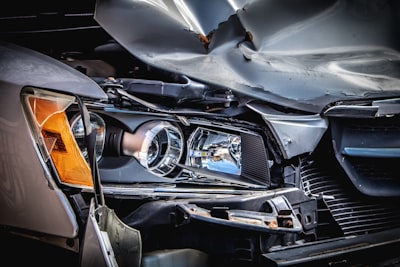
Few things confuse New Jersey crash victims more than the phrase “no-fault.” Many people assume it means fault doesn’t matter, that nobody can be held responsible, or that a lawsuit is off the table entirely. None of that is true. This guide explains how New Jersey’s no-fault system actually works, what PIP insurance in NJ covers, when you can sue in NJ for a car accident, and the deadlines and legal rules — from the two-year statute of limitations to the 51% comparative negligence bar — that every injured driver, passenger, and family member should understand.
Quick Answer
Short answer: Yes, New Jersey is a no-fault state for car accidents. After a crash, your own auto policy’s Personal Injury Protection (PIP) coverage pays your medical bills no matter who caused the collision. But “no-fault” only limits how medical bills get paid — you can still sue the at-fault driver for pain and suffering if your injuries meet New Jersey’s verbal threshold, or for any injury if you chose the zero-threshold (unlimited right to sue) option on your policy.
How New Jersey’s No-Fault Car Insurance System Works
New Jersey adopted no-fault auto insurance in 1972 through the New Jersey Automobile Reparation Reform Act, now codified at N.J.S.A. 39:6A-1 and the sections that follow. The goal was simple: get injured people’s medical bills paid quickly, without waiting months or years for insurance companies and courts to sort out who caused the crash.
Under this system, every standard New Jersey auto policy includes Personal Injury Protection, or PIP. When you’re hurt in a car accident — as a driver, a passenger, or even a pedestrian struck by a car — you turn first to your own PIP coverage (or the PIP coverage of a resident family member’s policy) for medical treatment. Your insurer pays those bills regardless of fault. Even if the other driver ran a red light and was entirely to blame, your medical care still flows through your own PIP benefits.
What no-fault does not do is erase responsibility. Fault still controls who pays for your vehicle damage, and it still determines whether you can recover compensation for pain, suffering, disability, and other non-economic losses. That is where New Jersey’s tort threshold options come in, and they are the single most important choice on your auto policy.
What Is PIP Insurance in NJ and What Does It Cover?
PIP is the engine of New Jersey’s no-fault system. On a standard policy, PIP medical expense benefits are available in amounts from $15,000 up to $250,000 per person, per accident — with $250,000 as the default selection. PIP covers reasonable and necessary medical treatment related to the crash: emergency care, hospital stays, surgery, diagnostic imaging, physical therapy, prescriptions, and more.
Standard-policy PIP can also include benefits beyond medical bills, such as income continuation for lost wages, essential services benefits (help with household tasks you can no longer perform), and death and funeral benefits.
Standard Policy vs. Basic Policy
New Jersey drivers can choose between a standard policy and a bare-bones basic policy. The basic policy carries only $15,000 in PIP medical coverage per person, per accident. Importantly, even drivers who selected lower PIP limits are generally still covered up to $250,000 for certain catastrophic injuries, such as permanent or significant brain injury or spinal cord injury requiring critical care. New Jersey also raised its minimum bodily injury liability limits to $35,000 per person and $70,000 per accident effective January 1, 2026, but those liability limits protect other people you injure — PIP is what pays for your treatment.
The Health-Insurance-Primary Option
Some drivers select an option making their health insurance primary for accident injuries in exchange for a lower premium. If you chose this option, your health plan pays first and PIP acts as backup. Be careful: Medicare, Medicaid, and many self-funded employer plans do not qualify or will not cover auto injuries the same way, which can leave dangerous gaps. If you’re unsure what you selected, check your declarations page or ask a lawyer to review it — it directly affects how your bills get paid after a crash.
“No-Fault” Doesn’t Mean No One Is at Fault
Is NJ a no-fault state for car accidents in every sense? No — and this is the point most people miss. The no-fault rules govern only first-party medical benefits. Everything else still runs on fault.
Property damage claims go against the at-fault driver’s insurer (or through your own collision coverage). Claims for pain and suffering, permanent disability, disfigurement, and loss of enjoyment of life are made against the negligent driver — if you have the legal right to bring them. And economic losses that exceed your PIP limits, such as unpaid medical bills and lost income beyond your coverage, can also be pursued against the person who caused the crash.
Verbal Threshold vs. Zero Threshold: Your Right to Sue
When New Jersey drivers buy a standard policy, they choose between two tort options under N.J.S.A. 39:6A-8.
Limitation on Lawsuit (the “Verbal Threshold”)
This cheaper option limits your right to sue for non-economic damages like pain and suffering. If you selected it, you can only bring a pain-and-suffering claim if your injury falls into one of six categories: death; dismemberment; significant disfigurement or significant scarring; a displaced fracture; loss of a fetus; or a permanent injury — meaning a body part or organ that has not healed to function normally and will not heal to function normally with further medical treatment. A permanent-injury claim must be supported by a physician’s certification based on objective medical evidence, such as MRI findings.
Drivers with a basic policy are automatically subject to the verbal threshold.
No Limitation on Lawsuit (the “Zero Threshold”)
This option costs more in premium but preserves your unrestricted right to sue the at-fault driver for pain and suffering for any injury, not just the six threshold categories. Many people don’t know which option they carry until after a crash — and the difference can be worth tens or hundreds of thousands of dollars in a serious case.
One more wrinkle: the threshold you’re held to is the one on your policy (or a family member’s policy you’re covered under), and it generally applies to claims against other covered New Jersey drivers. Certain defendants — for example, drunk drivers who are convicted, or drivers of vehicles not subject to the no-fault law, like many commercial trucks — may not get the protection of your verbal threshold at all. An experienced attorney can spot these exceptions.
So, Can You Sue in NJ for a Car Accident?
Yes, in many situations. You can generally sue (or bring a liability claim) when any of the following applies: your injuries meet the verbal threshold or you selected the zero-threshold option; you have economic damages that PIP doesn’t cover, such as medical bills above your PIP limit or lost wages beyond your income continuation benefits; you’re claiming vehicle and property damage; or the defendant isn’t protected by the verbal threshold, as with some commercial vehicles and certain intoxicated or uninsured drivers.
If the at-fault driver was uninsured or fled the scene, you may instead pursue an uninsured motorist (UM) claim through your own policy; if their coverage is too small for your losses, underinsured motorist (UIM) coverage may apply. These claims have their own notice requirements and traps, so get advice early.
What to Do After a Car Accident Legally in NJ
New Jersey car accident laws impose several duties at the scene and in the days that follow, and what you do early shapes both your PIP benefits and any injury claim.
First, stop and stay at the scene. Leaving the scene of an accident involving injury is a criminal offense under N.J.S.A. 39:4-129. Call 911 if anyone may be hurt — a police crash report becomes key evidence later.
Second, report the crash. If police did not investigate, New Jersey law (N.J.S.A. 39:4-130) requires you to file a written report within 10 days when the accident caused injury, death, or property damage over $500. In practice, virtually every injury crash meets this standard.
Third, get medical care promptly and follow through with treatment. Gaps in treatment are the single most common weapon insurers use to minimize claims. Notify your own insurer quickly as well — PIP benefits have notice requirements, and treatment beyond the initial emergency period typically requires precertification through your insurer’s decision-point review plan.
Fourth, document everything: photos of the vehicles, the roadway, and your injuries; names and contact information for witnesses; and a folder for every bill, EOB, and out-of-pocket expense. Finally, be cautious with the other driver’s insurance company. You are not required to give a recorded statement to the other side, and early “quick settlement” offers are almost always worth less than a properly documented claim.
Deadlines That Can End Your Claim
New Jersey gives injured people two years from the date of the accident to file a personal injury lawsuit under N.J.S.A. 2A:14-2. Miss it, and your claim is almost certainly gone forever, no matter how strong it was. Property damage claims carry a six-year deadline, and minors generally have until two years after their 18th birthday for injury claims.
There is a much shorter trap for crashes involving public entities. If your accident involved an NJ Transit bus, a municipal or county vehicle, a state employee, or a dangerous condition of public property, the New Jersey Tort Claims Act requires you to serve a formal notice of claim within 90 days of the accident (N.J.S.A. 59:8-8). Ninety days passes quickly when you’re in treatment — this deadline alone is a reason to talk to a lawyer soon after any crash involving a government vehicle or roadway defect.
Shared Blame: New Jersey’s 51% Comparative Negligence Rule
Insurance adjusters love to shift blame onto victims, and New Jersey law gives them a reason to try. Under the state’s modified comparative negligence statute, N.J.S.A. 2A:15-5.1, you can recover damages only if you were not more than 50% at fault for the crash. If you’re 51% or more responsible, you recover nothing from the other driver. If you’re 50% or less at fault, you can recover, but your award is reduced by your percentage of fault — a $200,000 award with 20% fault becomes $160,000.
Because every percentage point of blame costs you money, how the fault story gets told — in the police report, the recorded statements, and the evidence — matters enormously. This is one of the main things a car accident lawyer fights about on your behalf.
How These Rules Shape a Car Accident Settlement in NJ
There is no meaningful “average” car accident settlement in NJ, because the same rules that determine whether you can sue also drive what a case is worth: the severity and permanency of your injuries, whether you clear the verbal threshold, the amount of insurance available (liability, UM/UIM, and umbrella coverage), your economic losses beyond PIP, and any comparative fault assigned to you. Cases with objective findings — displaced fractures, herniated discs confirmed by MRI, surgical repairs, permanent scarring — typically resolve for far more than soft-tissue claims, and claims documented carefully from day one settle better than those left to the insurer’s version of events.
Frequently Asked Questions
Is New Jersey a no-fault state for car accidents?
Yes. New Jersey is one of the minority of states with a no-fault auto insurance system. Your own PIP coverage pays your accident-related medical bills regardless of who caused the crash. Fault still determines property damage claims and lawsuits for pain and suffering.
When did New Jersey become a no-fault state?
New Jersey enacted its no-fault law, the Automobile Reparation Reform Act, in 1972, and it took effect on January 1, 1973. It has been amended several times since, most significantly by the Automobile Insurance Cost Reduction Act of 1998, which created the modern verbal threshold.
Can you sue in NJ for a car accident?
Yes, if your injuries meet the verbal threshold (death, dismemberment, significant disfigurement or scarring, displaced fracture, loss of a fetus, or permanent injury), if you selected the zero-threshold option on your policy, or if your claim involves economic losses or defendants outside the no-fault system. Property damage claims are not limited by the threshold.
Does health insurance cover car accidents in NJ?
Usually PIP pays first. Health insurance becomes primary only if you selected the health-primary option on your auto policy — and some plans, including Medicare and Medicaid, don’t work with that option. Once PIP is exhausted, health insurance may pick up further treatment, subject to its own rules and possible liens.
Does a car accident have to be reported in NJ?
Yes. If police did not come to the scene, you must file a written report with the Motor Vehicle Commission within 10 days for any crash involving injury, death, or more than $500 in property damage. You must also notify your own insurer promptly to protect your PIP benefits.
How long do I have to file a car accident lawsuit in New Jersey?
Two years from the date of the accident for personal injury claims under N.J.S.A. 2A:14-2, and six years for property damage. If a public entity such as NJ Transit or a municipality is involved, you must serve a Tort Claims Act notice within 90 days.
How long does a car accident lawsuit take in NJ?
Straightforward claims may settle in a matter of months once treatment concludes; litigated cases commonly take one to two years or more, depending on the county, the medical evidence, and whether the case resolves at mediation, arbitration, or trial. A rushed settlement before your injuries are fully understood is rarely in your interest.
Injured in a New Jersey Crash? Talk to Sarofiem & Antoun for Free
New Jersey’s no-fault system was supposed to make things simpler. In practice, it hands injured people a maze of PIP paperwork, threshold rules, and short deadlines — while the insurance company works the other side of the file. The car accident attorneys at Sarofiem & Antoun help crash victims across all 21 New Jersey counties get their medical bills paid, prove their injuries meet the threshold, and pursue full compensation from every available policy.
The consultation is free, and we work on contingency — no fee unless we win. We proudly serve clients in English, Spanish, and Arabic. Contact NJ Crash today to have your policy, your threshold election, and your claim reviewed before deadlines run.
Legal Disclaimer: This article is for general informational purposes only and does not constitute legal advice. Reading it does not create an attorney-client relationship with Sarofiem & Antoun. Every case is different, and laws change; consult a licensed New Jersey attorney about your specific situation before acting on anything you read here.
