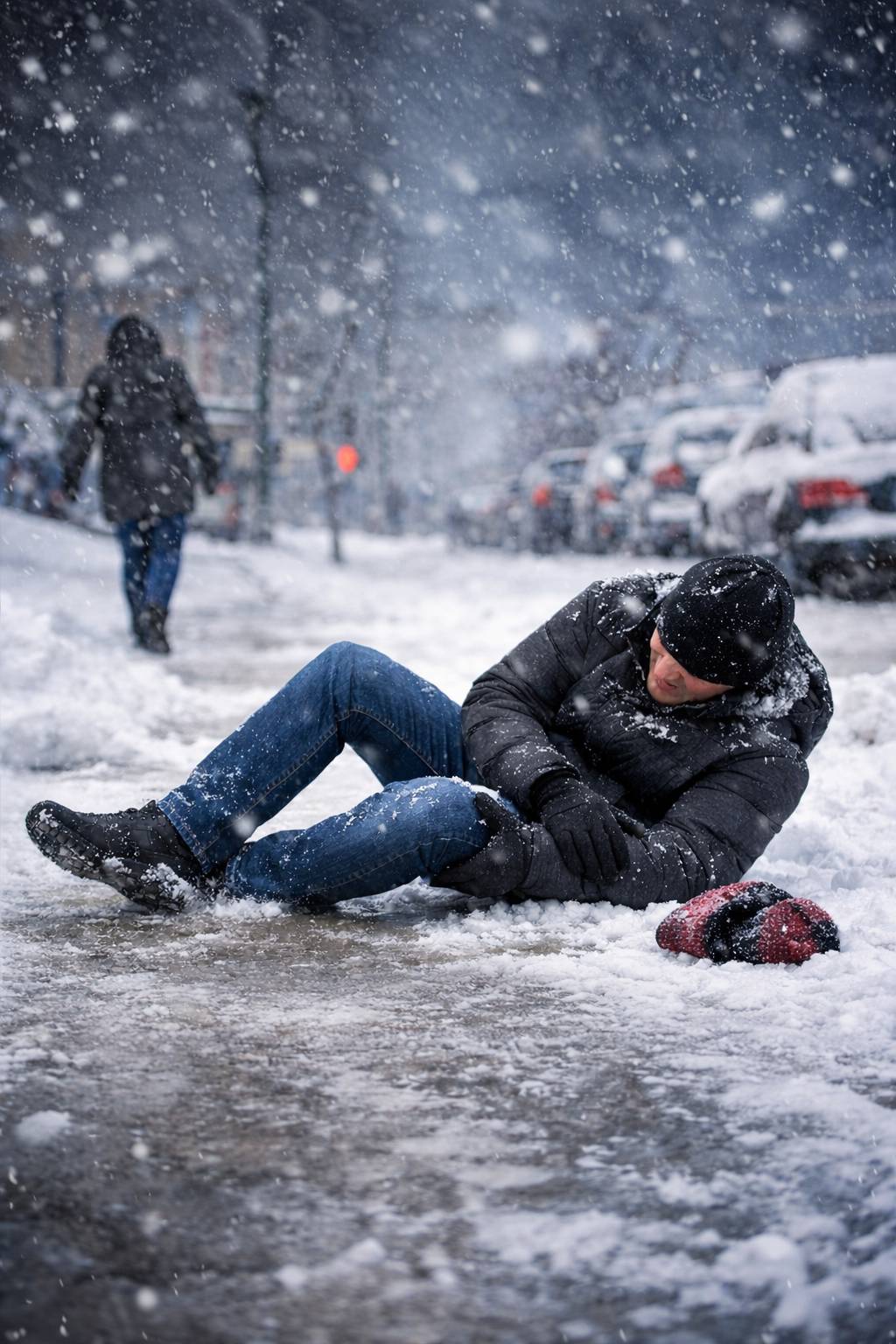
Heavy snowstorms are common in New Jersey—and unfortunately, so are serious slip and fall accidents that happen in the days that follow. Snow, ice, refreezing slush, and poorly cleared walkways create dangerous conditions for pedestrians, tenants, customers, and workers.
If you or a loved one slipped and fell after a snowstorm, one critical legal question immediately arises: Call NJ Slip and Fall Accidents Attorneys
Understanding Slip and Fall Liability After Snowstorms in New Jersey
Slip and fall cases after a snowstorm fall under New Jersey premises liability law. Liability depends on who owned, occupied, or controlled the property and whether they took reasonable steps to address snow and ice hazards.
Importantly, property owners are NOT automatically liable the moment snow falls—but their responsibility begins once they have had a reasonable opportunity to act.
The “Reasonable Time” Rule in New Jersey Snow & Ice Cases
New Jersey law generally allows property owners a reasonable amount of time after a snowstorm ends to remove snow and ice.
However, liability can arise when:
-
Snow removal is delayed unreasonably
-
Ice is allowed to refreeze
-
Snow piles melt and create black ice
-
Walkways are partially cleared, creating hidden hazards
There is no exact number of hours defined by law. Courts look at:
-
Severity of the storm
-
Duration of snowfall
-
Type of property
-
Foot traffic expectations
-
Prior complaints or history of falls
Who Can Be Held Liable for a Snow-Related Slip and Fall?
1. Commercial Property Owners & Businesses
Businesses have the highest duty of care.
Examples include:
- Grocery stores
- Restaurants
- Medical offices
- Retail stores
- Shopping centers
- Office buildings
If a customer slips on untreated ice in a parking lot, sidewalk, or entrance, the business owner may be liable—especially if:
- The storm had already ended
- No salt or treatment was applied
- Snow was plowed but ice remained
2. Landlords & Apartment Building Owners
Landlords are often responsible for:
- Common areas
- Sidewalks
- Entryways
- Parking lots
Even if a lease says tenants handle snow removal, landlords may still be liable for injuries in shared spaces.
3. Homeowners
Homeowners can be liable when:
- Guests, delivery workers, or mail carriers are injured
- Sidewalks remain icy beyond a reasonable time
- Dangerous conditions were known but ignored
4. Tenants & Commercial Lease Holders
In some cases, tenants (especially under triple-net or commercial leases) may be responsible for snow removal.
However:
- Lease language alone does not automatically eliminate landlord liability
- Courts examine actual control and maintenance practices
5. Cities & Municipalities
Claims against cities are possible but very limited.
Under the New Jersey Tort Claims Act, victims must:
-
Prove that dangerous conditions existed
-
File a Notice of Claim within 90 days
-
Show the municipality had prior notice and failed to act
These cases have strict deadlines—waiting can permanently bar your claim.
Common Locations for Snow-Related Slip and Fall Injuries
Slip and fall accidents commonly occur in:
- Sidewalks and crosswalks
- Parking lots and garages
- Building entrances
- Stairwells
- Apartment complexes
- Bus stops and train platforms
Refreezing overnight is a major cause of black ice injuries in New Jersey winters.
What You Must Prove to Win a Snow & Ice Slip and Fall Case
To succeed, you generally must prove:
- A dangerous condition existed
The property owner knew or should have known
They failed to take reasonable action
The condition directly caused your injuries
Evidence may include:
- Photos or videos
- Weather reports
- Maintenance logs
- Witness statements
- Incident reports
What to Do After a Slip and Fall During a Snowstorm
If you were injured:
- Seek medical care immediately
- Take photos of the scene
- Report the incident
- Preserve shoes and clothing
- Avoid giving recorded statements
- Contact a New Jersey slip and fall lawyer
How Sarofiem & Antoun, LLC Can Help
Slip-and-fall cases involving snow and ice are legally complex. Insurance companies often argue:
- The storm wasn’t over
- The owner didn’t have time to act
- The victim was careless
Our experienced attorneys know how to counter these defenses and fight for maximum compensation, including:
- Medical expenses
- Lost wages
- Pain and suffering
- Long-term disability
Injured After a Snowstorm in New Jersey? Get Legal Help Today
If you or a loved one was injured in a slip and fall accident after a snowstorm, do not wait. Evidence disappears quickly, and deadlines apply.
Contact Sarofiem & Antoun, LLC today for a free consultation.
We proudly serve Jersey City, Hoboken, Hudson County, and throughout New Jersey.
Frequently Asked Questions
How long does a property owner have to remove snow in New Jersey?
New Jersey law allows a reasonable amount of time after a snowstorm ends, depending on conditions and property type.
Can I sue if I slipped on ice after a snowstorm?
Yes, if the property owner failed to take reasonable steps to remove snow or ice.
Are businesses responsible for snow-related injuries?
Yes. Businesses have a high duty to keep premises safe for customers.
Can I sue my landlord for a slip and fall on ice?
Often yes, especially for injuries in common areas.